ICC Arrest Warrant for Putin Remains in Force: Oleksii Shevchuk Explains the Obstacles to Its Enforcement
The arrest warrant issued by the International Criminal Court (ICC) against Russian President Vladimir Putin in March 2023 remains in force. However, its enforcement depends on the willingness of states to cooperate with the Court, while political pressure on international institutions poses additional risks to the international justice system.
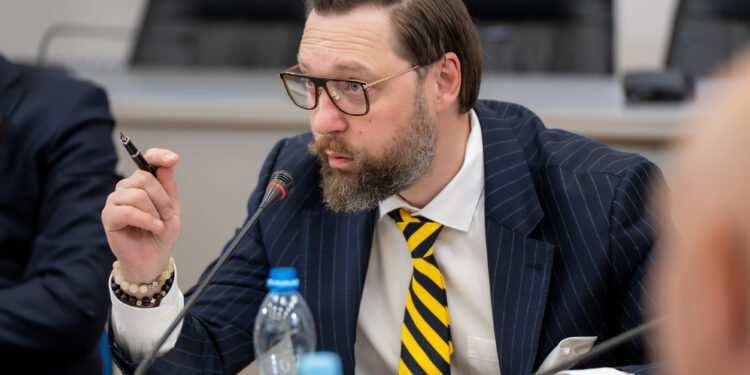
This is the assessment of Oleksii Shevchuk, an International Criminal Court lawyer and coordinator of Diplomatic Legal Hub, in his latest analytical article.
On 17 March 2023, Pre-Trial Chamber II of the ICC issued arrest warrants for Vladimir Putin and Maria Lvova-Belova, Russia’s Commissioner for Children’s Rights. The warrants concern alleged war crimes involving the unlawful deportation and transfer of Ukrainian children from occupied territories to Russia.
As Oleksii Shevchuk emphasises, the warrant remains valid and has no automatic expiry date. Under Article 58 of the Rome Statute, it remains in force unless the Court decides otherwise. At the same time, an arrest warrant is not a conviction: criminal responsibility must ultimately be established through judicial proceedings.
Why has the warrant not been enforced?
The main obstacle is not the absence of legal grounds for arrest, but the mechanisms available to ensure compliance with ICC decisions.
The International Criminal Court has no police force of its own and cannot independently arrest suspects on the territory of sovereign states. The execution of arrest warrants depends on cooperation by national authorities in states obliged to assist the Court under the Rome Statute.
The cases of Mongolia and Tajikistan are particularly illustrative. In October 2024, the ICC found that Mongolia had failed to comply with its obligation to arrest and surrender Putin to the Court. A similar decision concerning Tajikistan was issued in March 2026, following the Russian president’s visit to the country in October 2025.
These cases exposed a fundamental weakness in international justice: even when a state’s failure to comply with its legal obligations has been established, this does not automatically trigger coercive measures. Non-compliance may be referred to the Assembly of States Parties to the Rome Statute, but there is no automatic enforcement mechanism guaranteeing an arrest.
Political pressure on the ICC and risks to international justice
Oleksii Shevchuk also addresses the independence of the International Criminal Court. In particular, the United States has imposed sanctions on ICC officials in connection with investigations involving Israel and US interests.
In the lawyer’s view, political pressure on an international judicial institution raises serious concerns about its independence and its ability to pursue accountability for international crimes regardless of the political interests of individual states.
If the Court’s work is seriously obstructed or its independence compromised, this could weaken the international community’s ability to ensure accountability for crimes committed in Ukraine. The issue extends far beyond the arrest warrant against Putin: it concerns the ability of international justice to function independently of political considerations.
Why Ukraine needs a separate Special Tribunal
Another important distinction concerns the legal mechanisms for prosecuting war crimes and the crime of aggression. The existing ICC arrest warrant against Putin relates to alleged war crimes involving the deportation and transfer of Ukrainian children. It does not address the full scope of Russia’s war against Ukraine or establish responsibility for the decision to launch the invasion.
The ICC’s jurisdiction over the crime of aggression is subject to specific limitations under the Rome Statute. This makes a separate legal mechanism necessary.
For this reason, the establishment of a Special Tribunal for the Crime of Aggression against Ukraine remains particularly important. However, the process also involves complex legal questions, including the personal immunity of serving heads of state, heads of government and foreign ministers.
Shevchuk also points to the need for stronger institutional coordination at the national level, including a dedicated working group and a designated official responsible for this area.
The priority must remain accountability and the return of Ukrainian children
According to the lawyer, Ukraine’s strategy should focus on four key areas: preserving evidence capable of withstanding judicial scrutiny, making the return of deported children an independent priority, securing concrete commitments from international partners, and building long-term institutional capacity.
He stresses that the return of children must not depend on the completion of criminal proceedings. While courts establish individual criminal responsibility, governments, diplomats, international organisations and human rights advocates must continue working to reunite children with their families.
In March 2026, the UN Independent International Commission of Inquiry on Ukraine reported that it had verified cases involving 1,205 Ukrainian children who had been deported or forcibly transferred. At the time of the assessment, approximately 80% of the children in the documented cases had not been returned. These figures refer to cases verified by the Commission, not the total number of children affected.
As Oleksii Shevchuk concludes, the arrest warrant against Putin should neither be dismissed nor turned into a myth. It is a judicial decision based on specific allegations and carrying legal obligations, even if its enforcement remains difficult.
The ultimate objective is not simply a symbolic photograph of Putin in handcuffs, but a fair judicial process, the establishment of individual criminal responsibility and a judgment supported by evidence.
International law is tested not when compliance is easy, but when upholding it comes at a political cost.