Is the Execution of the ICC Arrest Warrant for Putin Possible?
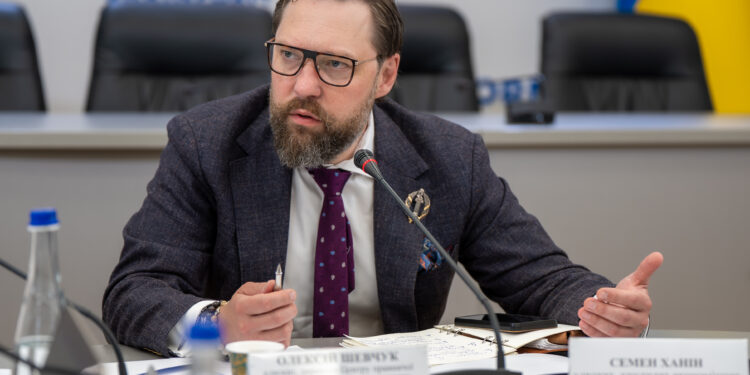
By Oleksiy Shevchuk, advocate
Let us discuss the arrest warrant for Putin. It has not disappeared.
The International Criminal Court (ICC) issued an arrest warrant for the Russian dictator in 2023 in connection with the deportation of Ukrainian children. The Court’s jurisdiction is based on the provisions of the Rome Statute, to which more than 120 states are parties.
Is the warrant still valid today? Absolutely. It remains in force and must be executed by States Parties to the Rome Statute when the conditions stipulated therein are met.
At the same time, the United States has imposed sanctions on ICC officials in the context of investigations related to Israel and US interests. This raises a fundamental question concerning political pressure on an international judicial institution and attempts to undermine its independence.
What Happens If the ICC Loses Its Independence?
If the work of the International Criminal Court is seriously obstructed or its independence is compromised by political pressure, its ability to pursue accountability for international crimes committed in Ukraine will be weakened. The issue is not limited to the arrest warrant for Putin; it also concerns the ability of international justice to function independently of states’ political interests.
The warrant must be executed if Putin enters the territory of a state obliged to cooperate with the Court. However, there is no mechanism that guarantees his arrest outside the territories of such states. Another obstacle is the blocking of United Nations Security Council decisions through Russia’s exercise of its veto power.
This is why the question of establishing a special tribunal for the crime of aggression against Ukraine is more relevant than ever. Nevertheless, the lack of adequate institutional coordination at the national level, including a dedicated working group and an official responsible for this area, remains a serious problem.
Among the proposed mechanisms is a multi-level approach involving an advisory opinion from the International Court of Justice on the legality of Russia’s continued membership of the UN Security Council, followed by efforts to remove this obstacle and address the question of aggression. However, such a scenario requires a separate legal assessment and cannot be presented as a guaranteed or straightforward route to the issuance of a new arrest warrant.
For Ukraine, it is essential that international justice remain independent of political expediency. Behind these legal mechanisms are real people: children who have not returned home and parents who do not know where to find them.
In March 2026, the Independent International Commission of Inquiry on Ukraine reported that it had verified cases involving the deportation and forcible transfer of 1,205 Ukrainian children. At the time of the assessment, approximately 80 per cent of the children in the documented cases had not been returned. These figures do not represent the total number of children affected, but only the cases verified by the Commission.
Behind these figures lie lost years of childhood and severed family ties. That is why the independence of international justice is not merely a matter of institutions or international reputation. It is a question of whether the law can protect individuals against the machinery of the state and whether the office of president can serve as a shield against investigations into the gravest crimes.
What Actually Happened on 17 March 2023?
On 17 March 2023, Pre-Trial Chamber II of the International Criminal Court issued arrest warrants for Vladimir Putin and Maria Lvova-Belova, Russia’s Commissioner for Children’s Rights. The warrants concerned alleged war crimes involving the unlawful deportation and transfer of children from occupied territories of Ukraine to Russia.
Two clarifications are important here. First, the warrants were issued by judges, not by the Prosecutor. They constitute judicial decisions made following consideration of the prosecution’s materials, rather than the personal initiative of an official that could be overturned by that official’s resignation.
Second, an arrest warrant is not a conviction. The Court found reasonable grounds to believe that the suspects may bear criminal responsibility. Their guilt must ultimately be established through judicial proceedings. The presumption of innocence is not a concession to Putin; it is a principle that distinguishes justice from retribution.
In Putin’s case, the Court also indicated potential responsibility under the theory of a superior’s failure to exercise proper control over subordinates. International criminal law therefore examines not only the conduct of those who directly carried out the transfers of children, but also the responsibility of leaders who may have controlled the relevant system or allowed it to operate.
From the outset, therefore, the proceedings have concerned individual accountability at the highest level.
Why the Argument That “Russia Does Not Recognise the ICC” Does Not Close the Case
One of the most common arguments runs as follows: Russia is not a party to the Rome Statute, and therefore the Court cannot prosecute its president. However, international criminal jurisdiction does not operate that simply.
In cases involving war crimes, crimes against humanity and genocide, the nationality of the suspect is not the only relevant factor. The territory on which the alleged conduct occurred also matters. Article 12 of the Rome Statute provides for a territorial basis of jurisdiction. Consequently, Russia’s lack of consent does not, in itself, remove the Court’s jurisdiction over crimes committed on the territory of Ukraine.
In other words, a state cannot automatically grant its citizens immunity from prosecution for crimes committed on foreign territory merely by refusing to join an international treaty.
The arrest warrant is also frequently described as “indefinite”. More precisely, under Article 58 of the Rome Statute, it remains in force unless and until the Court orders otherwise. It does not automatically expire after several years, nor does it cease to exist when the Prosecutor changes.
The passage of time does not, in itself, turn suspicion into innocence. But neither does it replace the need to prove the case.
Mongolia and Tajikistan: When Law Meets Politics
This raises an obvious question: if the warrant has legal force, why has Putin not been arrested?
The International Criminal Court has no police force of its own. Arresting and surrendering a suspect therefore depends on the cooperation of states and their national authorities. The Rome Statute establishes the relevant obligations and procedures, but it does not authorise the ICC to execute arrest warrants independently on the territory of states.
Mongolia demonstrated this limitation. On 24 October 2024, the Court found that Mongolia had failed to comply with its obligation to cooperate in Putin’s arrest and surrender. The matter was referred to the Assembly of States Parties. The Chamber also confirmed that the personal immunity of a head of state does not bar proceedings before the ICC and does not require a separate waiver.
A similar situation subsequently arose with Tajikistan. According to a decision dated 19 March 2026, Putin was present in Tajikistan from 8 to 12 October 2025, but was neither arrested nor surrendered to the Court. On 7 May 2026, the ICC Presidency announced that the decision had been referred to the President of the Assembly of States Parties.
These are not merely diplomatic episodes. They are instances in which states failed to fulfil their legal obligations. This is where the most serious gap emerges: between the Court’s legal authority to require an arrest and its ability to secure compliance.
The law allows the Court to establish non-compliance and refer the matter to the Assembly of States Parties or, in appropriate circumstances, to the UN Security Council. However, it does not provide for an automatic coercive sanction in response to such a refusal.
It would therefore be inaccurate to claim that no procedure exists for executing the warrant. A procedure does exist. The weak point is enforcement when a state deliberately chooses to defy its obligations.
A State Party does not merely express support for international justice; it assumes binding obligations. It is precisely at politically inconvenient moments that the true value of those commitments becomes apparent.
International Justice: What Is Putin Accountable For, and Where Are Its Limits?
One sometimes hears the question: why has international justice focused on the deportation of Ukrainian children when Ukraine has suffered so many other crimes? But framing the issue in this way diminishes both the gravity of the crime itself and the significance of the investigation.
In March 2026, the UN Commission concluded that the deportation and forcible transfer of Ukrainian children, as well as their enforced disappearances, constituted crimes against humanity. This is not an ICC judgment, but it is an important finding by an international investigative body. At the same time, no future judgment can restore the years these children have lost. That is why investigations, efforts to establish the whereabouts of children and their return must proceed in parallel.
However, the arrest warrant for Putin concerns specific alleged war crimes involving the unlawful deportation and transfer of children. It is not a legal response to the entire war. Accountability for crimes committed during a war and accountability for the decision to wage a war of aggression are distinct legal questions.
The ICC’s jurisdiction over the crime of aggression is subject to specific limitations under the Rome Statute. The law provides for different mechanisms for exercising jurisdiction, including depending on whether the situation has been referred to the Court by the UN Security Council. Accordingly, accountability for aggression requires a separate legal mechanism.
A Special Tribunal for the Crime of Aggression against Ukraine is being established for this purpose. Nevertheless, a swift outcome cannot be promised here either: the personal immunity of incumbent heads of state, heads of government and foreign ministers remains a complex legal issue.
Society needs not exaggerated promises, but a clear strategy: what is already possible, what remains constrained, and what still needs to be done.
What Ukraine Should Do While the Arrest Remains Outstanding
I do not believe it is honest to promise that Putin will be arrested by a particular date. Legal possibility, political circumstances and the practical capacity to execute a warrant are not the same thing. However, the absence of an arrest today does not justify inaction. In my view, Ukraine’s strategy should be based on four priorities.
First: Evidence That Will Stand Up in Court
Public outrage is understandable, but it cannot replace evidentiary work. What is needed is documentation, witness testimony, verified digital material and evidence establishing links between specific acts and specific leaders. Our objective is not merely to persuade the public, but to build cases that can withstand scrutiny in adversarial proceedings.
Second: The Return of Children as an Independent Priority
The return of children must not wait until criminal proceedings have concluded. While the Court determines individual criminal responsibility, the state, diplomats, international organisations and human rights defenders must work in parallel to reunite children with their families.
Third: Specific Requirements for International Partners
General declarations of support for the ICC are not enough. What is needed are effective national procedures for arrest and surrender, properly prepared competent authorities and a willingness to act if a suspect enters the territory of the relevant state. The Rome Statute requires states to ensure that their domestic legislation provides procedures for the forms of cooperation stipulated by the Statute.
Fourth: Long-Term Institutional Continuity
Investigations must not depend on a single political cycle, leader or sensational headline. Ukraine needs stable teams, secure evidence, professional coordination and clearly assigned responsibility for every area of work.
International justice requires endurance. We must organise our efforts so that we have not only the determination to act, but also the staying power to see the work through.
What Outcome Are We Really Seeking?
The arrest warrant for Putin should neither be dismissed nor turned into a myth.
It is not a conviction, a guarantee of swift arrest or an answer to every crime committed against Ukraine. It is, however, a judicial decision based on specific allegations, involving victims and giving rise to legal obligations. Its significance does not disappear simply because its execution has proved difficult.
I want us not to lose sight of what matters most in this discussion. Our ultimate objective is not a photograph of Putin in handcuffs as a symbol of political victory, but proper judicial proceedings, the establishment of individual criminal responsibility and a judgment whose authority rests on the strength of the evidence.
Alongside this, there must be a child who has returned home; a family that has learned the truth; a witness who has been protected; a document that has been preserved; and a state that has not refused to fulfil its obligations.
International law is tested not when compliance is easy, but when it comes at a political cost.
Our task is to ensure that this cost is no longer borne solely by the victims.