Why Has Ukraine Still Not Appointed Its Full List of Ad Hoc Judges to the European Court of Human Rights?
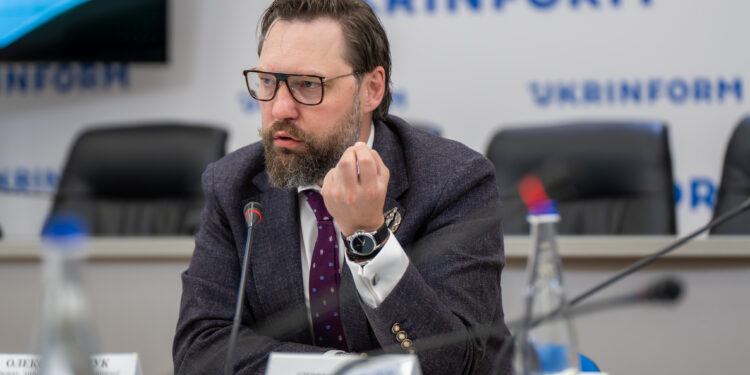
Oleksii Shevchuk, lawyer and partner at Barristers Law Firm, spoke with Mykola Hnatovskyi, the judge elected to the European Court of Human Rights (ECtHR) in respect of Ukraine, to find out why the country has still not designated its final representative to the list of ad hoc judges, who would be eligible to replace Judge Hnatovskyi when necessary.
“I continue to share my diplomatic reflections, inspired by my studies at the Diplomatic Academy of Ukraine. Today, I had the opportunity to speak with Mykola Hnatovskyi, the judge elected to the European Court of Human Rights in respect of Ukraine.
One of the interesting and, at the same time, important issues we discussed was the formation of Ukraine’s list of ad hoc judges for the ECtHR. According to the information shared during our conversation, Ukraine still has only two individuals on its list of ad hoc judges instead of the required three. In other words, the list remains incomplete,” Shevchuk noted.
The ad hoc mechanism provides for the appointment of another judge in cases where the judge elected in respect of the relevant State is unable to participate in the examination of a particular case, including due to withdrawal. There have already been instances in which, because Mr Hnatovskyi was unable to participate in the examination of certain cases, the ECtHR had to appoint judges from other countries.
ECtHR judges, including ad hoc judges, are independent and do not represent the interests of their respective States when administering justice. Nevertheless, it is the responsibility of each State to ensure that its list of candidates is properly constituted.
“Of course, the Court must ensure the continuity of the administration of justice and deliver decisions in accordance with established procedures. This is precisely what Mr Hnatovskyi emphasised.
However, another question arises for me: why has Ukraine still failed to complete its list of three ad hoc judges?
This is not merely an administrative matter. It concerns the proper representation of the Ukrainian legal system within an international judicial mechanism, the institutional responsibility of the State, and its ability to fulfil its international procedural obligations in a timely manner,” Shevchuk said.
“In my view, Ukraine must complete this procedure as soon as possible and ensure that the list of ad hoc judges is fully constituted.
We speak extensively about European integration, the rule of law and international justice. Yet these principles begin with concrete institutional decisions.
Diplomacy is not limited to international negotiations. It also requires the ability to identify gaps within one’s own state system and address them in a timely manner,” Mr Shevchuk concluded.